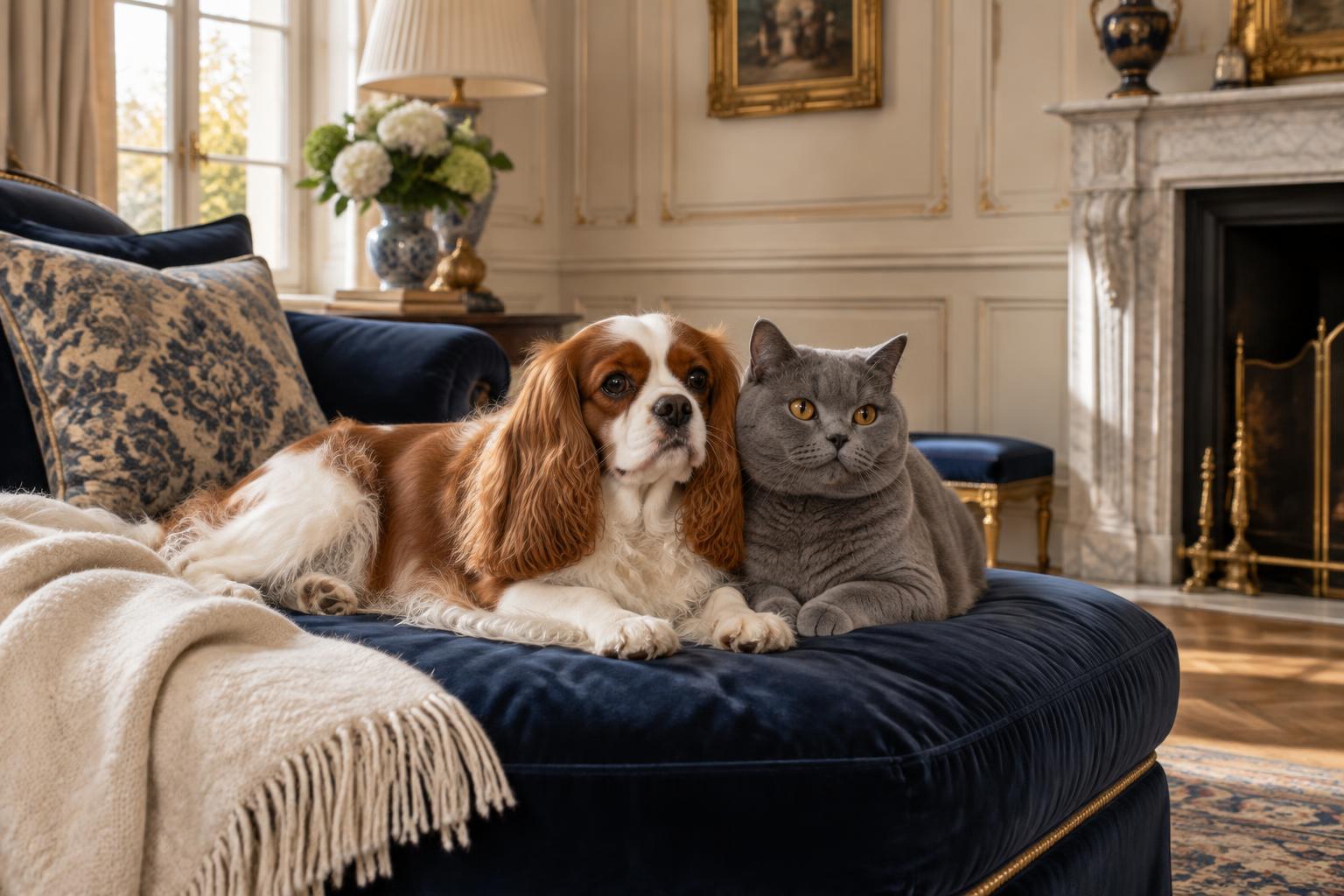
The Language of Style: Dressing Your Companion with Intention

Style, properly understood, is not decoration. It is attention made visible — the quiet evidence that someone has considered how a companion moves, rests, and feels throughout the day.
There is a difference between dressing an animal and dressing for an animal. The first is costume: a moment of amusement that ends the instant the photograph is taken. The second is intention — a garment chosen because the morning is cold, the coat is thin, the walk is long, or the evening asks for a little more composure than usual.
Everything that follows begins from a single principle: nothing worn should cost a companion their comfort.
Fit Before Fashion
A well-cut piece is the most elegant thing a companion can wear, and the most protective. Measure three places before anything else: the neck at its base, the chest at its widest point behind the front legs, and the back from the base of the neck to the base of the tail. Write them down. Trust them over any size label.
A garment should follow the body without gripping it. Two fingers should slide easily beneath any strap. Nothing should press into the armpit, ride against the throat, or shorten a stride. Watch the walk after dressing — if the gait changes, the fit is wrong, however beautiful the fabric.
Elegance is what remains when nothing restricts.
Materials That Respect the Skin
Natural fibres remain the most forgiving against fur and skin. Wool holds warmth even when damp and breathes as the body warms. Cotton and linen suit mild days and sensitive skin. Waxed cotton and tightly woven technical shells belong to rain and wind, worn over — never instead of — a soft inner layer.
Avoid coarse seams, stiff linings, and anything that traps heat without release. Run a hand along the inside of a garment before it goes on a body. If it is not pleasant against your own wrist, it does not belong against their chest.
Season sets the wardrobe. Winter asks for insulation and length across the back. Spring and autumn ask for water resistance without weight. Summer, for most companions, asks for nothing at all beyond shade and water.
A Restrained Palette
A small wardrobe, chosen well, will always look more considered than a large one gathered by impulse. Build it from navy, camel, cream, and deep charcoal, with warm gold hardware as the single recurring accent. These tones sit gracefully against every coat colour, from cream to brindle to black.
Four pieces are usually enough: a tailored day coat, a rain layer, a soft knit for the evening, and one collar or harness that quietly belongs with all three.
The Etiquette of Accessories
Collar, harness, and leash should read as one composed line rather than three separate decisions. Match the metals — gold with gold, silver with silver — and keep the leather tones within one family. Leather softens with wear and ages into character; hardware should feel substantial in the palm without adding weight to the neck.
For most walks, a well-fitted harness distributes pressure across the chest and spares the throat entirely. The collar then becomes what it should be: a place for identification, and a finishing note.
Reading Your Companion
A garment is welcome when it is forgotten. Watch for ease: a relaxed posture, a normal stride, ears and tail carried as usual, attention turned outward to the world rather than inward to the fabric.
Remove it at once if you see freezing or reluctance to move, repeated shaking or biting at the fabric, a lowered head and tucked tail, panting without exertion, or any attempt to back out of it. These are not stubbornness. They are sentences, spoken clearly.
Introduce anything new slowly — a few seconds indoors, a reward, then removal — and let the association build before the first long wear. Nothing should be worn unsupervised.
The most stylish companion in any room is the most comfortable one.
This is the whole of it. Choose less, choose better, and let the fit, the fibre, and the finish serve the animal first. Style, at Maison de la Patte, is simply care that has learned good manners.