
The Language of Love
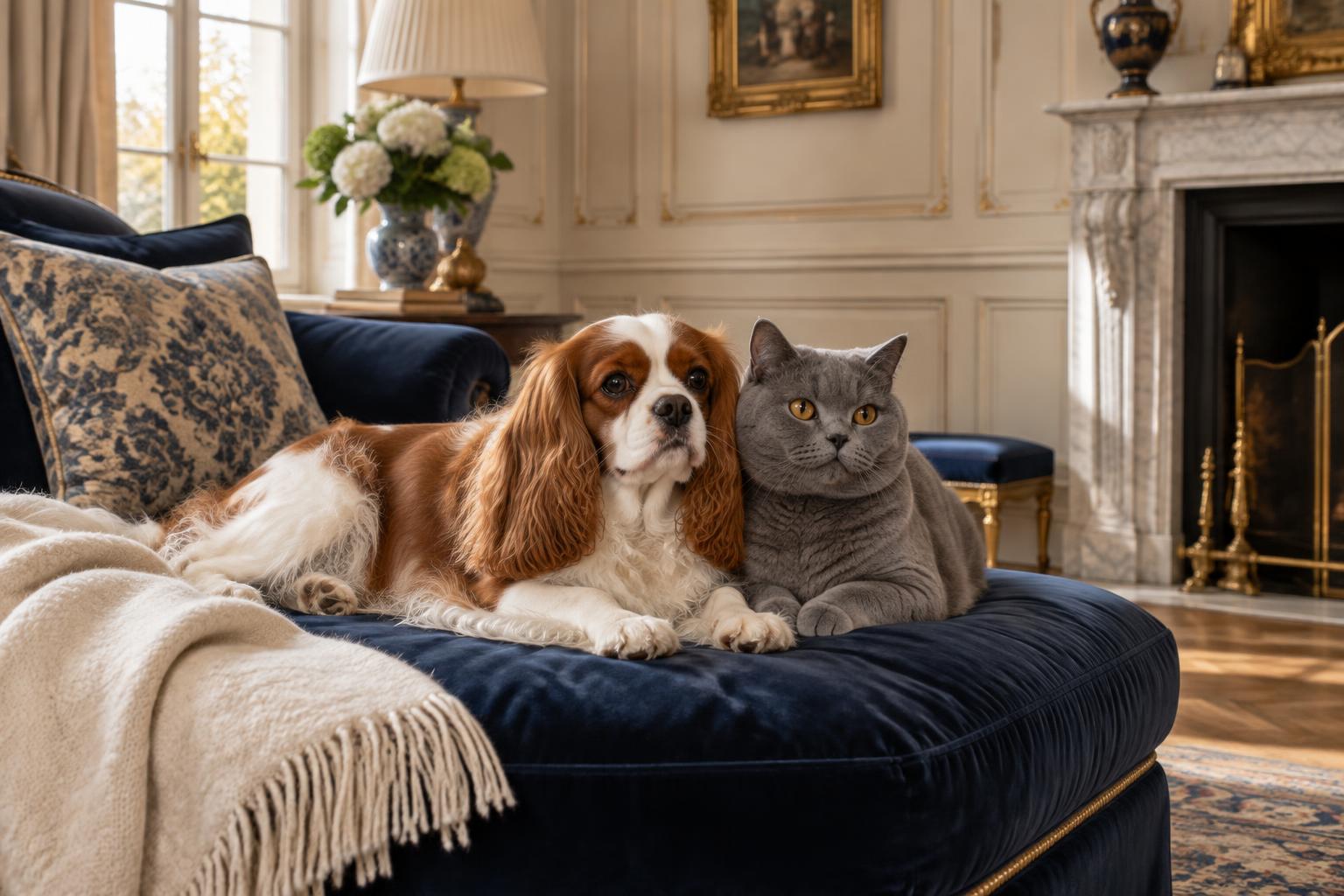
Perhaps love has never belonged to one species.
We often speak about the five love languages as something distinctly human: words of affirmation, quality time, physical touch, acts of service and gifts.
But spend enough time with a dog or a cat, and something rather beautiful becomes apparent. They seem to speak them too.
Not with words, of course. But through behaviour, presence, touch, rituals and gestures that feel remarkably familiar.
Perhaps the language of love is not as human as we once thought.
Words of Affirmation
We know that our words can matter to the animals who live alongside us. A familiar voice can bring comfort. A warm greeting can become part of a daily ritual. A dog's ears may lift at the sound of their name, or their whole body may change when they hear the voice of the person they trust.
Cats, too, learn the voices, sounds and tones associated with their humans. They may not understand a declaration of love in the human sense, but they can recognise something equally important: the meaning carried by the person speaking.
Tone. Familiarity. Attention.
Sometimes love is simply hearing a voice that means you are safe here.
Quality Time
For humans, quality time is not necessarily about doing something extraordinary. It is about being together.
Animals understand this beautifully. A dog lying beside you while you work. A cat settling in the same room while you read. A walk taken together. A quiet evening shared without any particular purpose.
Nothing spectacular is happening. And yet, something is.
Togetherness itself can be the gift. For animals whose lives are deeply shaped by their relationship with us, our presence becomes part of their world.
Physical Touch
A hand resting gently on a dog's head. A cat leaning into a familiar touch. A dog pressing their body against your leg. A cat choosing your lap.
Touch can communicate what words cannot.
But there is an important distinction: genuine affection is not simply about giving touch. It is about recognising whether touch is welcome. The most beautiful form of physical affection is reciprocal.
We reach out. They choose to come closer. And sometimes they tell us, very clearly, that they would rather not.
Respecting that answer is part of loving them.
Acts of Service
Perhaps this is where the connection becomes most interesting. Humans often experience acts of service as love: making someone a meal, taking care of something for them, making their life easier.
And what is caring for an animal if not an extraordinary collection of acts of service?
We prepare their food. We provide clean water. We take them outside. We groom them. We arrange their environment. We notice when something is different. We make appointments when they need care. We protect them.
Much of what we call care is, in fact, love expressed through action. And animals respond to that consistency.
A meal arriving every day. A door opening for the morning walk. A familiar routine. A safe place to sleep.
Love does not always announce itself. Sometimes it simply shows up.
Gifts
Then there are gifts. Humans give flowers, jewellery, books and beautifully wrapped presents.
Dogs may bring us a toy. Cats may carry an object into a room, leave something beside us or present us with the results of their own curiosity and hunting instincts.
The objects themselves are not necessarily the point. The gesture is.
I found something. I brought it here. It belongs in our relationship.
The meaning we attach to the gift may be different from the meaning the animal intended. But the underlying behaviour feels remarkably familiar.
We give because giving can be a way of connecting.
Perhaps the Languages Are Universal
Of course, dogs are not people, and cats are not small humans. Their needs, perceptions and social behaviours are different from ours. We should never assume that an animal interprets an action exactly as a human would.
But that does not make the parallels less fascinating. If anything, it makes them more so.
Across species, we repeatedly see behaviours centred around presence, contact, attention, care and exchange. The forms change. The language changes. But the relationship remains.
Perhaps what we call love languages are simply some of the many ways social beings communicate attachment.
Learning to Speak Theirs
The most rewarding part is not teaching an animal our language. It is learning theirs.
To notice when a dog seeks proximity. To recognise when a cat chooses contact. To understand when an animal wants attention — and when they want space. To see the difference between excitement and comfort, between dependence and trust, between simply being nearby and actively choosing connection.
Because love is not only about expressing ourselves. It is about becoming good at receiving what another being is trying to tell us.
And perhaps that is why our relationships with animals can feel so profound. They remind us that connection existed long before we gave it a name.
A More Universal Language
Maybe the five love languages were never exclusively human. Maybe we simply gave names to something that life has been expressing in countless ways all along.
A touch. A presence. A gesture. An act of care. A gift. A choice to remain close.
Different species. Different expressions. And yet, somehow, we recognise the feeling.
Perhaps love has always been a language with more than one voice.
Maison de la Patte

